Tag: Philosophy
-
Five Rules for Questions That Approximate Truth
The ability to ask precise questions determines how close we get to understanding reality. Poor questions produce poor answers. This chapter presents five rules for constructing questions that lead toward truth rather than away from it. Rule 1: Make Your Questions Falsifiable Connor sat in his university library in 2018, reading about the replication crisis…
-

Hitler’s philosophy of Evil
In Nazi ideology, antisemitism drew heavily on disgust-based imagery. Jews were depicted as vermin, parasites, or infectious agents. Hitler himself, in Mein Kampf, referred to Jews as “parasites” and “bacilli” that “infect the body of nations.” This rhetoric reframed genocide as an act of purification rather than aggression. Once a group is perceived as a…
-
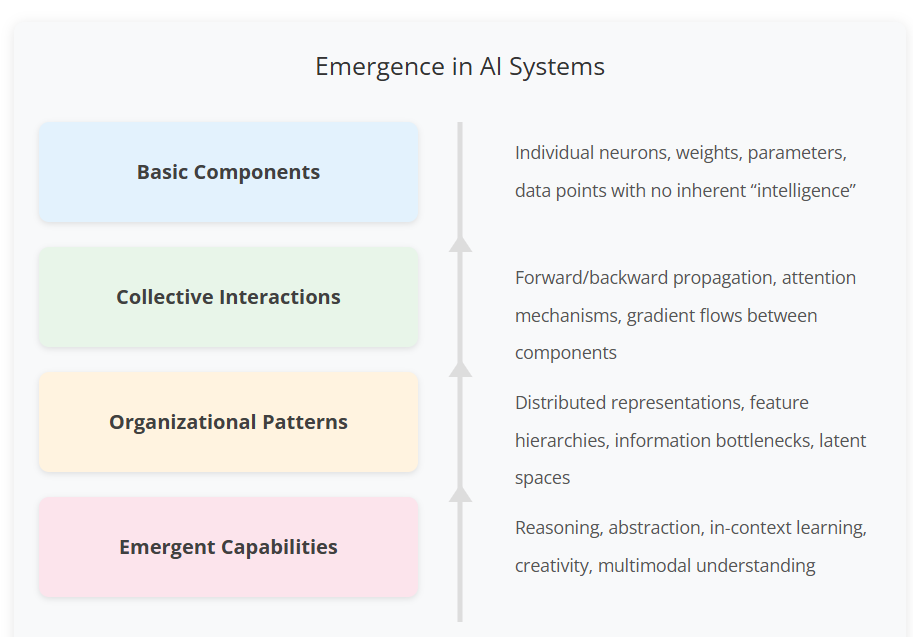
Emergent Structures in AI and how body becomes mind
How does mindfulness emerge from mindless matter? How do billions of neurons firing in patterns, or millions of artificial parameters in a neural network, give rise to understanding, consciousness, and meaning? This transition from body to mind, from physical substrate to mental experience, represents one of the most fascinating frontiers in both philosophy and artificial…
-
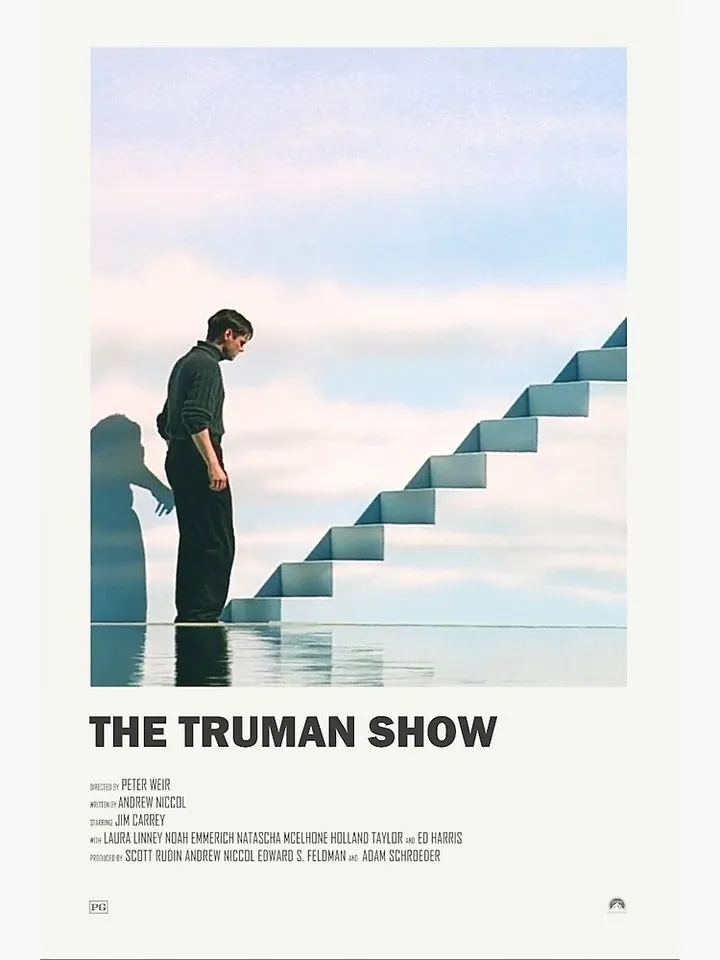
A true man: The Truman Show
For me, The Truman Show speaks to a fundamental paradox within us: the desire for truth, the fear of it, and the strange comfort we find in illusions. It explores not just deception, but what it means to live a life that feels empty—until something real pierces through.
-

Evil: Scarlett O’ Hara is the best written and most misunderstood female character
Being strong and unconventional sometimes means you can’t afford to be gentle I have not yet conducted a detailed demographic analysis of my blog readers, so I may lose some of you by introducing Scarlett O’Hara—the protagonist of Margaret Mitchell’s bestselling 1939 novel “Gone with the Wind.” This novel takes place during the American Civil…
-
Weekly Problem No 12. A unified model of human biases
[raw] The Paradox of Market Street Week 1 Challenge | Deadline: Next Monday “In the bustling city of Behavoria, on the famous Market Street, a peculiar experiment is taking place…” The Scenario Three shops opened on Market Street, each selling identical coffee mugs: 🏪 Shop A: Sells mugs for $10 🏪 Shop B: Initially sells…
-

Weekly Problem No.10. The Repeated Prisoner’s Dilemma
The Prisoner’s Dilemma, first formulated by Merrill Flood and Melvin Dresher in 1950 and later formalized by Albert W. Tucker, represents one of game theory’s most profound insights into human behavior and strategic decision-making. The classic scenario unfolds as follows:
-

Liar! Weekly Problem
🤔 Philosopher A 🤯 Philosopher B “Let’s start our discussion about the Liar Paradox…” Next Step Reset The Liar Paradox is one of the oldest and most famous logical paradoxes, dating back to ancient Greece. In its simplest form, it’s captured in the statement: “This statement is false.” Understanding the Paradox: If we assume the…
-

Intersectional Theory and Antisemitism
The political left needs to stop this now The Holocaust, known as Shoa for Jewish people, resulted in the tragic loss of six million Jewish lives, leaving an indelible imprint on global history and memory. Following the conclusion of World War II, the establishment of the state of Israel in 1948 provided a homeland for…
-

Legal Reasoning and the Roe v. Wade Decision: Exploring the Intersection of Law and Morality
The case of Roe v. Wade (1973) is a seminal moment in U.S. legal history, epitomizing the complex interplay between legal reasoning, constitutional interpretation, and moral values. At its core, Roe v. Wade addressed the deeply contentious issue of abortion and the constitutional right to privacy, ultimately legalizing abortion nationwide and establishing a landmark precedent…
-

Human Trafficking- the slavery in the present we don’t talk about
Slavery is not History, it is happening right now! Human trafficking, a heinous crime plaguing societies worldwide, encompasses the illegal transportation of individuals through coercion or deceit for purposes such as labor exploitation, sexual servitude, or other activities that financially benefit traffickers. Let’s explore various types of human trafficking, examine the legal frameworks established to…
-

This is why most people are wrong about almost anything
The case of minimum wage laws serves as a poignant illustration of the perils of inductive reasoning. Hayek’s predictions, though grounded in economic theory and empirical observations, failed to account for the multifaceted dynamics shaping labor markets. By extrapolating from limited data and theoretical abstractions, Hayek fell victim to the inherent biases and oversights characteristic…
-

AI is not creative, it is just good at recycling
Can machines truly be creative? Some argue yes, pointing to AI-generated art, music, and literature. However, upon closer examination, it becomes apparent that the creativity exhibited by AI is merely a permutation of existing information rather than genuine innovation. True creativity, as exemplified by pioneers like Isaac Newton, involves the generation of new knowledge to…
-
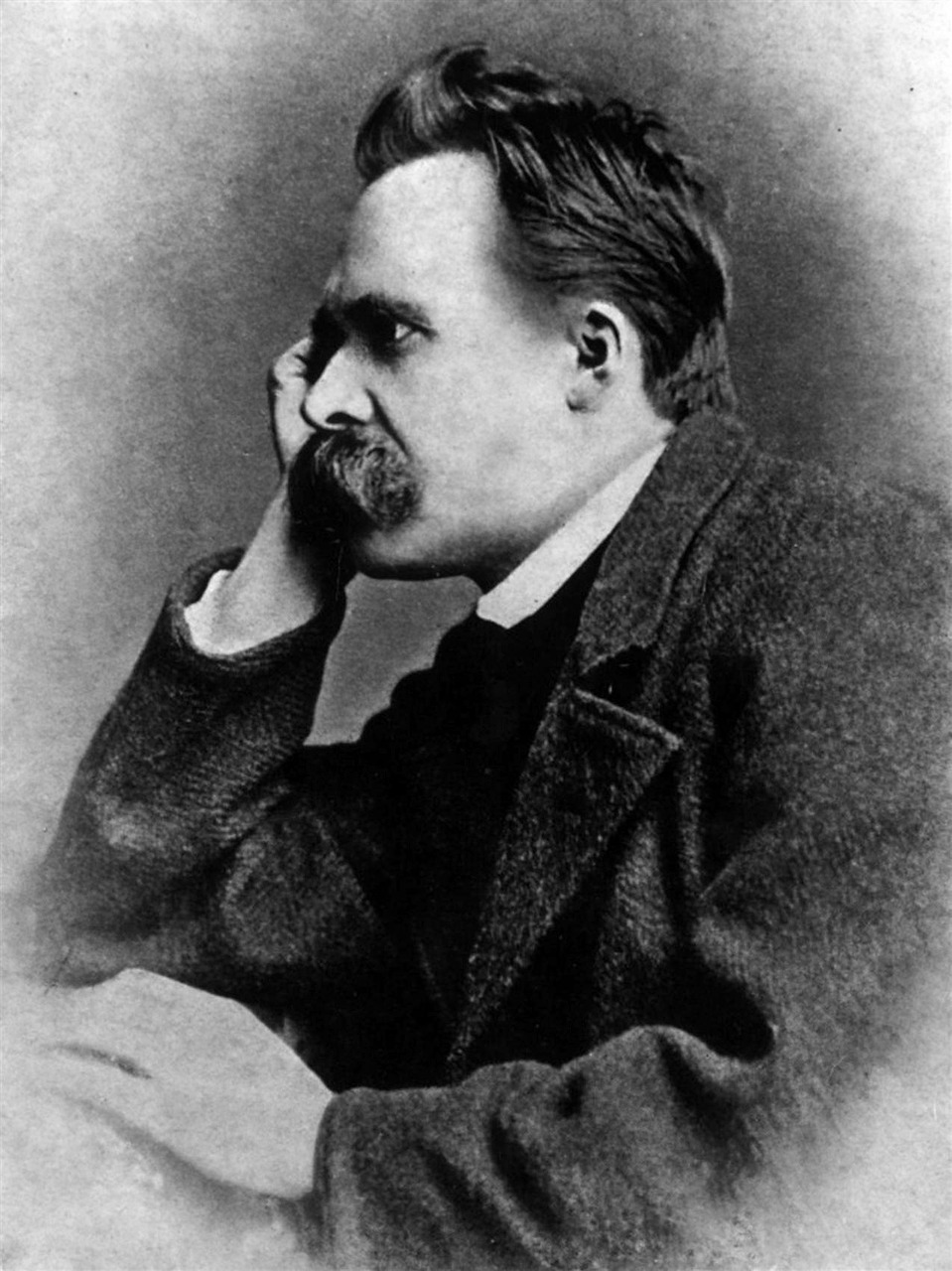
Man is the only animal that must be encouraged to live
What is the purpose of life? Noone is actually noticing me in the world so why should I still live? What is the point? The troubles of becoming more intelligent, come with a blindness for absurdity.
-

Platonic-romantic relationships: That one dating category no one ever heard about.
Platonic relationships offer some advantages for people struggling with emotionally connecting to people, especially the other sex. However, most people never heard of platonic relationships or dismiss it rather quickly as “not for them”. That’s wrong and here’s why:
-

We don’t have the humility to face global warming
Often in our modern political discussions regarding economy and ecology, we see these two dimensions as somehow conflicting. Economic progress is often associated with an exploitation of natural resources on earth. The professor for philosophy at the University Gustav Eiffel, Corine Pelluchon argues in an Essay called “Ecology as new Enlightenment” that was published in…
-

Conservatives’ sad attempt to manipulate women
Title: Conservatives’ sad attempt to manipulate women Description: In this article, we take a closer look at the conservative argument against feminism, which suggests that women are taught to prioritize their careers over motherhood and marriage. The author argues that the real issue lies in the economic structure that doesn’t support family-friendly policies, and most…