Tag: Thought
-
Weekly Problem #32
🔐 Weekly Puzzle Crack the Code Puzzle #28 · Caesar Cipher 🔒 Encoded Message VJG HKTUV UVGR KU VJG JCTFGUV Word spacing is preserved · only letters are shifted ✏️ Your Answer ✗ Not quite — recheck your shift and try again. Check Answer → 🎉 You cracked it! THE FIRST STEP IS THE HARDEST…
-
Weekly Problem: Seven Bridges
WEEKLY PROBLEM The Seven Bridges of Königsberg Can you cross every bridge exactly once? Difficulty: ★★★☆☆ Topic: Mathematics · Logic · Computer Science The Problem Imagine the city of Königsberg in Prussia in the eighteenth century. The city was divided by a river, with two islands sitting in the middle. Seven bridges connected the…
-
Five Rules for Questions That Approximate Truth
The ability to ask precise questions determines how close we get to understanding reality. Poor questions produce poor answers. This chapter presents five rules for constructing questions that lead toward truth rather than away from it. Rule 1: Make Your Questions Falsifiable Connor sat in his university library in 2018, reading about the replication crisis…
-
The Equivalence of Legal Argumentation and Mathematical Proof: Why Precedent and Proof by Analogy Are the Same Thing
The Basic Structure of Legal Precedent In legal argumentation, lawyers constantly use this reasoning: In case Y, the situation was such-and-such, and the defendant was acquitted. In our current case X, the situation is like the situation in case Y. Therefore, the same argumentation that led to acquittal in case Y should apply, and the…
-
Weekly Problem: The Game Show Dilemma
The problem Imagine you’re a contestant on a popular game show. The host shows you three closed doors: behind one is a brand-new luxury car, and behind the other two are goats (which, unless you’re in the market for a goat, are considerably less valuable prizes). You select Door #1, hoping it contains the car.…
-
Weekly Problem: Knitting Patterns
Knitting Patterns: Turing Completeness and Computational Textiles Knitting Patterns as Computational Systems: Turing Completeness in Textile Production An exploration of the formal computational properties of knitting pattern languages The relationship between knitting patterns and computational systems extends beyond superficial analogy. Recent work in theoretical computer science has demonstrated that certain classes of knitting patterns constitute…
-
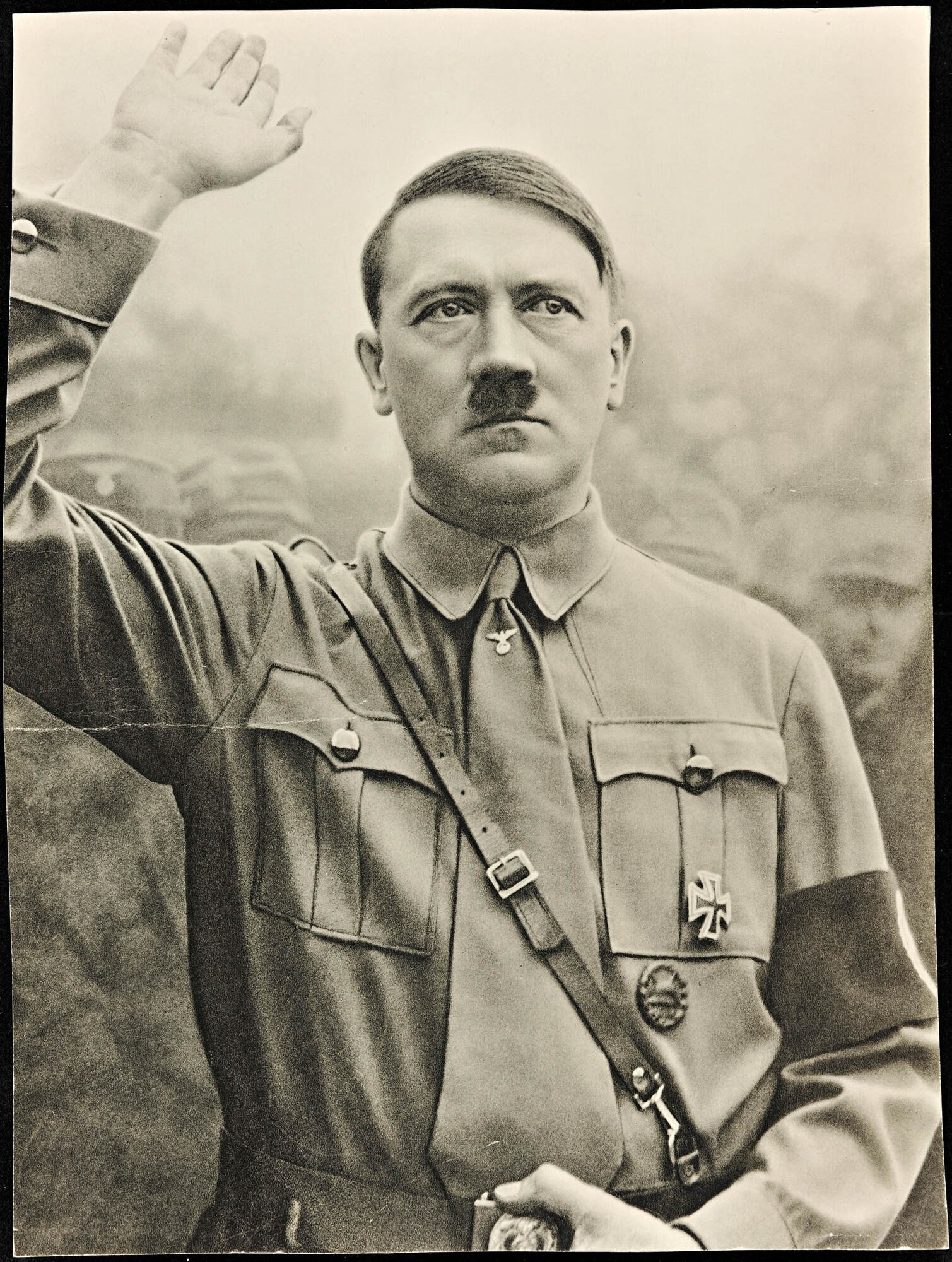
Hitler’s philosophy of Evil
In Nazi ideology, antisemitism drew heavily on disgust-based imagery. Jews were depicted as vermin, parasites, or infectious agents. Hitler himself, in Mein Kampf, referred to Jews as “parasites” and “bacilli” that “infect the body of nations.” This rhetoric reframed genocide as an act of purification rather than aggression. Once a group is perceived as a…
-
Weekly Problem: The Grid
Consider a 4×4 grid where each cell can be either selected or not selected. Two cells cannot both be selected if they share an edge (top, right, bottom, or left).
-
Weekly Problem- Let’s get complex
Consider this sequence: 1, 3, 7, 15, … Each number seems to follow a simple rule, but there’s something magical happening when we look at their binary representations. This sequence demonstrates how simple patterns create complex constraints – a fundamental concept in complex systems.
-

When Pain Shapes Politics: On Discrimination, Protest, and the Risk of Misplaced Anger
It’s about how personal and collective pain—often valid and justified—sometimes spills over into debates where it clouds our ability to judge clearly. I see this pattern in feminist debates, in discussions about universities or the military, and very strikingly in the infamous O.J. Simpson trial.
-
Weekly Problem: Traffic
You’re managing a busy intersection where cars arrive from the north and east. Each direction gets a 30-second green light. Your goal is to decide which direction should get the green light next to minimize the total waiting time
-

A true man: The Truman Show
For me, The Truman Show speaks to a fundamental paradox within us: the desire for truth, the fear of it, and the strange comfort we find in illusions. It explores not just deception, but what it means to live a life that feels empty—until something real pierces through.
-
Weekly Problem: Latin Squares
Weekly Problem: Latin Squares and Experimental Design The Mystery of Latin Squares A Latin square is a grid where each symbol appears exactly once in each row and column. Simple to describe, yet they hold deep mathematical mysteries and practical applications! A B C B C A C A B Part 1: The Basic Challenge…
-
Weekly Problem: The Card Sequence Problem
Problem Statement You have three cards numbered 1, 2, and 3. You shuffle them and place them face down in a row. Question: What is the probability that at least one card is in its correct position (i.e., card number matches its position)?
-
The 3-Sum Puzzle
What’s This All About? Imagine you’re given a list of numbers. Let’s say 20 numbers, chosen from 1 to 100. The question is simple: Is it always true that you can find three different numbers in the list whose sum is divisible by 3? It sounds easy, right? But once you try different lists, you’ll…
-

Evil: Scarlett O’ Hara is the best written and most misunderstood female character
Being strong and unconventional sometimes means you can’t afford to be gentle I have not yet conducted a detailed demographic analysis of my blog readers, so I may lose some of you by introducing Scarlett O’Hara—the protagonist of Margaret Mitchell’s bestselling 1939 novel “Gone with the Wind.” This novel takes place during the American Civil…
-
Weekly Problem: Fallacy Fallacy
Understanding the Fallacy Fallacy Test your knowledge about the fallacy fallacy – the mistake of assuming that if an argument contains a fallacy, its conclusion must be false.