Disgust Sensitivity, Disease, and the Logic of Dehumanization
What makes people capable of evil?
It’s a question that has haunted philosophers and psychologists for centuries. Evil rarely announces itself through obvious malice. More often, it grows from ordinary human emotions — fear, the need for order, or the sense that something impure must be expelled.
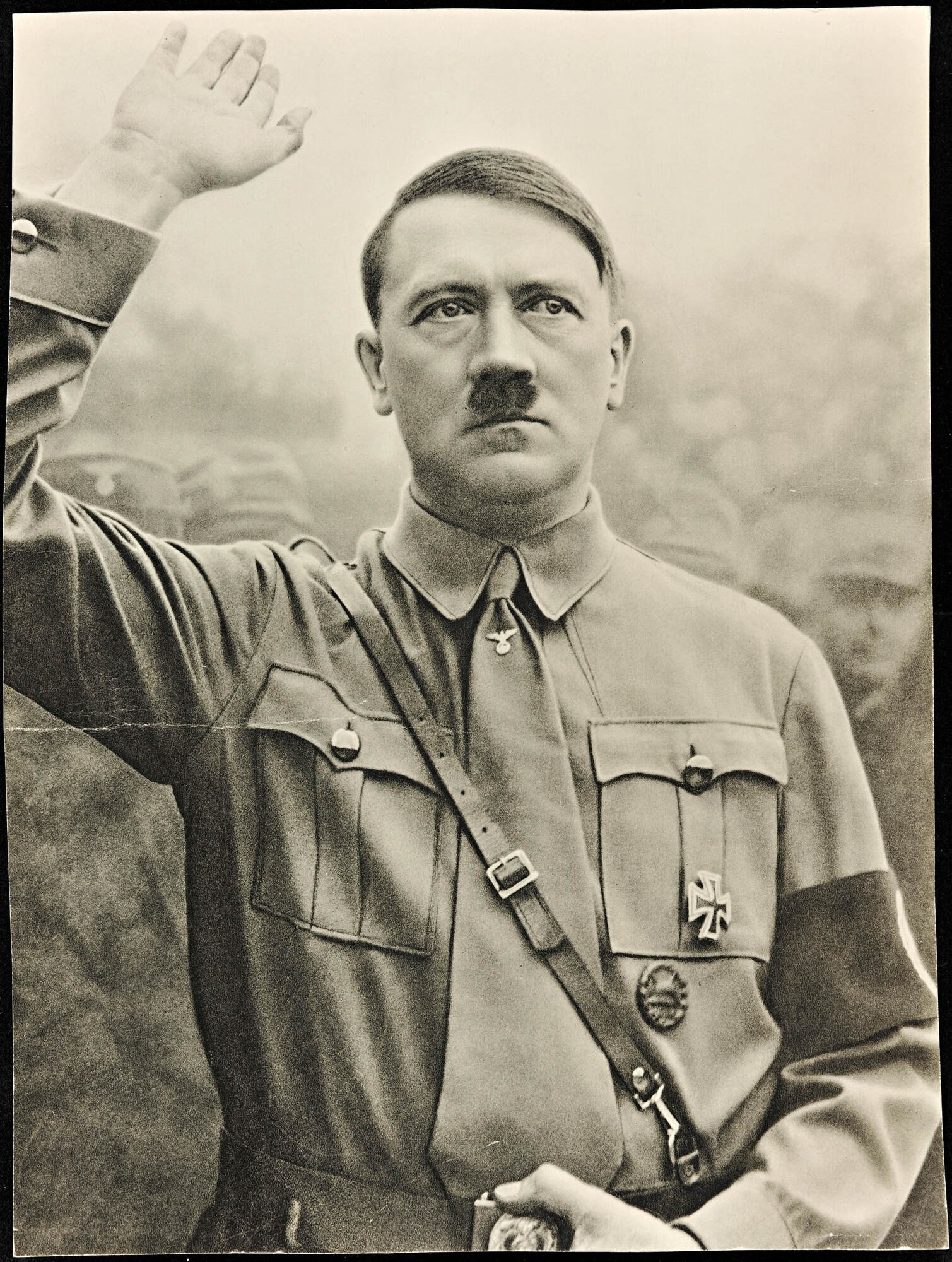
The story of Adolf Hitler is not just about ideology or power. It is also about emotion — and, more precisely, about disgust. Understanding how disgust operates helps explain not only Nazism but the deeper psychological patterns that still drive hatred today.

Evil as an Extension of Ordinary Psychology
Evil often emerges from normal psychological motives pushed to extremes. The need for order or certainty, useful in daily life, can become destructive when joined with fear or disgust and justified by ideology. Both philosophy and psychology point to the same mechanism: when people fail to examine their own emotions, they project them onto others. This projection turns personal unease into moral hostility. In Eastern philosophy, the coexistence of light and darkness within the individual symbolizes the need for self-knowledge to prevent imbalance. Similarly, in moral psychology, the failure to recognize one’s own emotional predispositions can result in projection and moral blindness.
Disgust as a Root of Dehumanization
Disgust is one of our oldest emotions. It evolved to protect us from things that could make us sick — rotting food, filth, decay. It’s a reflex, often felt before we can think: the body recoils, the stomach turns, the mind rejects. But disgust is not limited to what we touch or taste. Psychologists have found that it also extends into the moral and social sphere. People can feel “contaminated” not only by dirt but by ideas, behaviors, or groups they perceive as foreign or impure. Once disgust moves from biology to morality, it becomes dangerous. Unlike anger or hatred, which still acknowledge an opponent, disgust erases personhood. Its goal is not to confront but to exclude — to remove the offending element entirely.
Historical accounts describe Adolf Hitler as maintaining strict personal routines and habits of cleanliness. His valet, Karl Wilhelm Krause, noted that Hitler bathed and shaved daily, reflecting a strong preoccupation with personal hygiene. While such reports are limited and largely anecdotal, they align with broader observations of his emphasis on order, purity, and control. This attention to physical cleanliness provides contextual support for psychological interpretations linking Hitler’s personality to high disgust sensitivity and the moralization of purity that later defined his political ideology.
In Nazi ideology, antisemitism drew heavily on disgust-based imagery. Jews were depicted as vermin, parasites, or infectious agents. Hitler himself, in Mein Kampf, referred to Jews as “parasites” and “bacilli” that “infect the body of nations.” This rhetoric reframed genocide as an act of purification rather than aggression. Once a group is perceived as a pathogen, moral restraint collapses, as acts of violence can be rationalized as a hygienic necessity.
Authoritarianism Hypothesis
The connection between disgust and authoritarianism has empirical support. Studies in political psychology have identified correlations between pathogen prevalence and the development of authoritarian or collectivist social structures.
One influential study by Murray, Schaller and Suedfeld found that societies historically exposed to higher rates of infectious disease tend to display stronger authoritarian values and governance systems. The authors proposed that heightened disease threat activates behavioral immune responses — psychological mechanisms that promote conformity, traditionalism, and xenophobia to reduce perceived exposure to contamination.
Inbar, Pizarro, and Bloom (2009) found that individuals with higher disgust sensitivity tend to express more conservative and exclusionary moral attitudes (Emotion, 9(3), 435–439). Terrizzi, Shook, and McDaniel (2013) later synthesized the evidence, showing that disgust sensitivity predicts ethnocentrism and authoritarianism across cultural contexts (Social and Personality Psychology Compass, 7(8), 620–633).
Under this framework, totalitarian systems can be understood as large-scale expressions of pathogen-avoidance psychology. They impose uniformity, stigmatize deviation, and construct symbolic “diseases” in the form of social outgroups. Hitler’s ideology exemplified this pattern: his vision of the nation as a cleansed organism mirrored the behavioral immune system’s tendency to expel perceived contaminants.
In this sense, antisemitism in Nazi Germany was not a purely cognitive prejudice but a sensory-moral response institutionalized through political means. The regime’s emphasis on hygiene, order, and purification resonated with existing emotional predispositions. The metaphor of disease unified personal discomfort and national ideology.
Evil as the Absence of Reflection
If disgust and the fear of contamination are innate, evil arises when these impulses are unexamined. Hannah Arendt’s notion of the “banality of evil” captures this mechanism: atrocities occur not through demonic intent but through the failure to think critically about one’s actions and emotions. Disgust bypasses reflection because it feels self-justifying; the sensation of impurity appears self-evident. When such affective reactions are left unchecked, they can override empathy and reason.
Moral development, therefore, depends not on the eradication of disgust but on its regulation. Ethical maturity requires recognizing the difference between physical contamination and moral difference. To confuse the two, as Hitler did, is to collapse the distinction between hygiene and ethics — a confusion that historically enabled genocide.
Conclusion
The psychological roots of evil lie not in abnormality but in the misdirection of ordinary mechanisms: the pursuit of purity, the avoidance of contamination, and the desire for order. When disgust becomes moralized and attached to social categories, it enables dehumanization and justifies violence.
Understanding evil, then, requires understanding disgust — both as an emotion and as a cultural tool. The task of philosophy and psychology alike is to transform instinct into reflection. To recognize that the impulse to purify, when detached from empathy and reason, leads not to moral clarity but to moral collapse.
References:
- Inbar, Y., Pizarro, D. A., & Bloom, P. (2009). Disgust sensitivity predicts intuitive disapproval of gays. Emotion, 9(3), 435–439.1 https://doi.org/10.1037/a0015960. The details you provided for this study are correct, and its findings support the link between disgust sensitivity and exclusionary moral attitudes, specifically regarding attitudes toward gay men.
- Terrizzi, Jr., J. A., Shook, N. J., & McDaniel, M. A. (2013). The behavioral immune system and social conservatism: A meta-analysis. Social and Personality Psychology Compass, 7(8), 620–633. https://doi.org/10.1111/spc3.12058. The citation details are also correct. This paper is a meta-analysis that synthesizes research and confirms a positive correlation between disgust sensitivity (a component of the behavioral immune system) and socially conservative ideologies, which include ethnocentrism and authoritarianism.